

With new legislation and requirements under the Employment Rights Act now (or soon) in effect, how does the next year look for everyone?
For you and many, it means more admin and less room for error.
While reviewing your policies and ensuring they’re up to date for these new employment laws is important, it’s just as important to look at how to ease the process for you and your business.
So, which Employment Rights Act measures are live, which are further down the line, and (most importantly) how can you make these new requirements and managing staff compliance as simple as possible?
Big changes at a glance:
Keeping records for holidays becomes mandatory
Statutory sick pay eligibility expands & the waiting period is removed
The Fair Work Agency introduces stricter enforcement
A reduction in the unfair dismissal qualifying period
1. Duty to keep holiday records (from 6th April 2026)
Keeping accurate holiday records is, while a late addition, now a legal requirement coming into force next week. Something many businesses aren’t prepared for.
What’s changing?
- Employers must keep detailed and accurate records of employee holiday and leave under the Working Time Regulations.
- Records must include: ordinary & additional leave, any carried-over leave, holiday pay details, and any payments in lieu of holiday.
- Records must be kept for six years, but can be kept in any format the employer deems appropriate.
Why does it matter?
With this late employment law change, many businesses aren’t (and won’t be) ready for the 6th April, and they risk errors and even non-compliance from manual tracking.
It’s a lot more admin, especially if you and your company have complex annual leave pay processes, or the way you calculate and record them all is quite out of date.
What can you do?
You need to remove as much manual tracking as possible so you aren’t weighed down by admin, while remaining compliant.
With RotaCloud…
- Holiday accrual is automatically calculated and tracked.
- Records are accurate, centralised, and audit-ready.
- You have visibility across teams, departments, and sites.
- Leave types and holiday pay rates are customisable.
- There’s no more manual tracking.
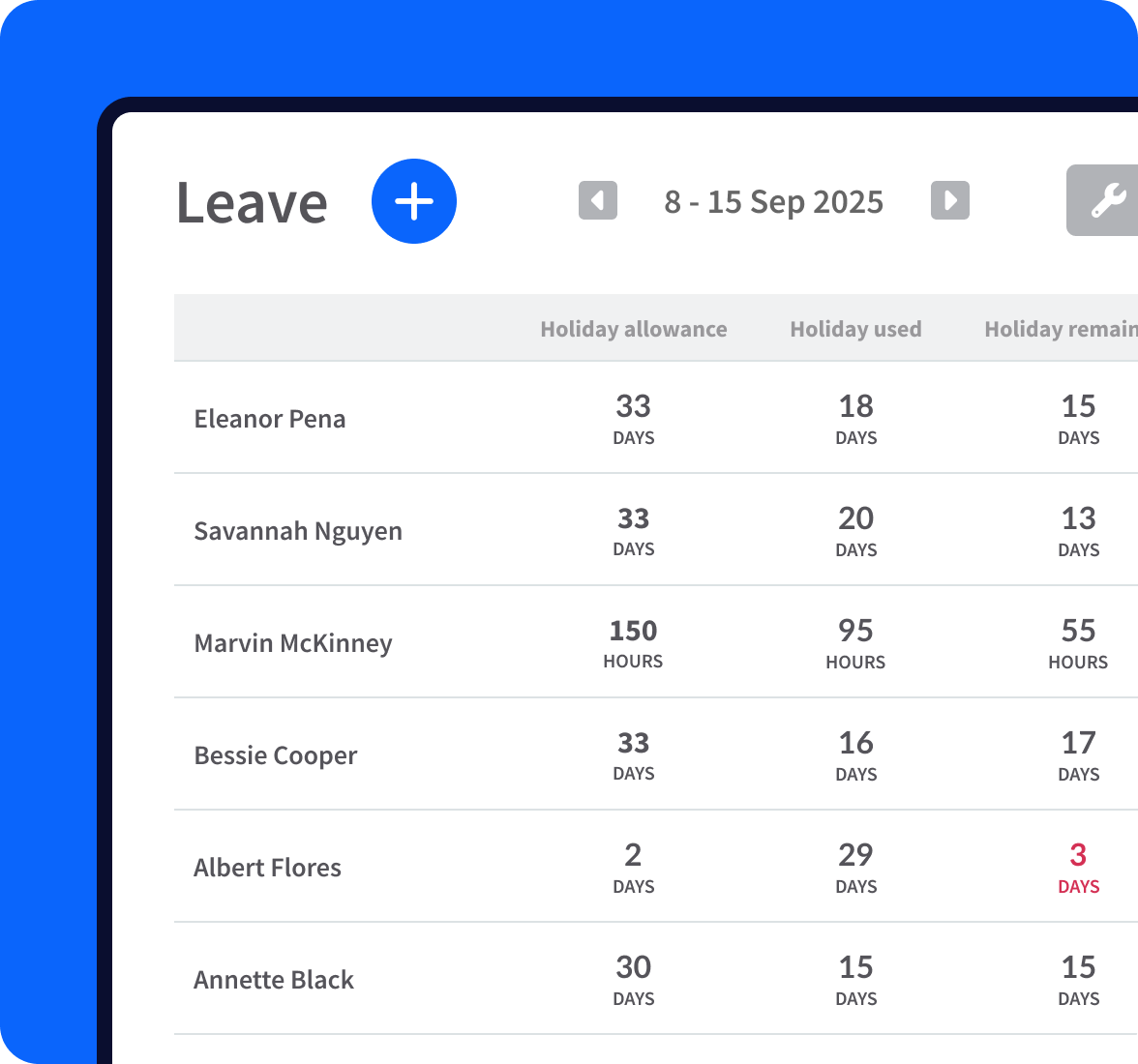
Hassle-free holiday management with RotaCloud
Self-service tools, automatic calculations, and accurate leave records for you and your team.
2. Statutory sick pay changes (from 6th April 2026)
More employees will become eligible – and sooner.
What’s changing?
- Statutory sick pay (SSP) will be payable from the first day of sickness, entirely removing the three-day waiting period.
- The lower earnings limit of £123 will be removed, making it available to all workers.
- The standard rate will rise from £116.75 per week to £118.75 per week (for up to 28 weeks)
Why does it matter?
This measure grants over a million low-paid workers higher statutory sick pay rates and eases the financial impact of being off sick.
While this benefits employees, it does create new challenges for employers.
Employers face financial strain from more employees claiming statutory sick pay and the risk of more short-term, last-minute absences. It’ll become harder to monitor patterns, manage absenteeism, and plan rotas reliably.
What can you do?
With these statutory sick pay changes, you need to keep the guesswork and admin to a minimum, all while keeping your costs under control.
With RotaCloud…
- Absence tracking helps you see the impact on staffing levels.
- You can identify trends like repeat absences and patterns.
- Absences are logged and help with data-backed decisions.
- Records are in one place with all the information you need for compliance.

Absence management in RotaCloud
Record absence, spot staffing problems early, and fill gaps fast with RotaCloud’s absence management – including Bradford Factor and open shifts.
3. Fair Work Agency (from 7th April 2026)
The Fair Work Agency is a new enforcement body with stronger powers to ensure compliance.
What’s changing?
- The Fair Work Agency enforces holiday obligations and pay.
- They have the power to enter premises, inspect documents, and serve notices.
- Evidence will be needed to show compliance.
- Penalties can be given for poor record-keeping and underpayment to workers.
Why does it matter?
It’s important to be able to show compliance. By demonstrating that you can show data, keep records, and have a strong process and audit trail, you’re in a better position from the get-go.
What can you do?
It’s no longer enough to say you’re compliant. You need to prove it.
You should audit how you record annual leave, holiday entitlement, and pay to ensure all gaps are filled, and your processes are fine-tuned.
With RotaCloud…
- Track real-time labour costs as you schedule.
- You have complete wage visibility.
- Set custom pay rates to save manual calculations (and human error).
- Easily compare working hours to scheduled hours.
- You have access to clear, detailed digital records, available with a click.
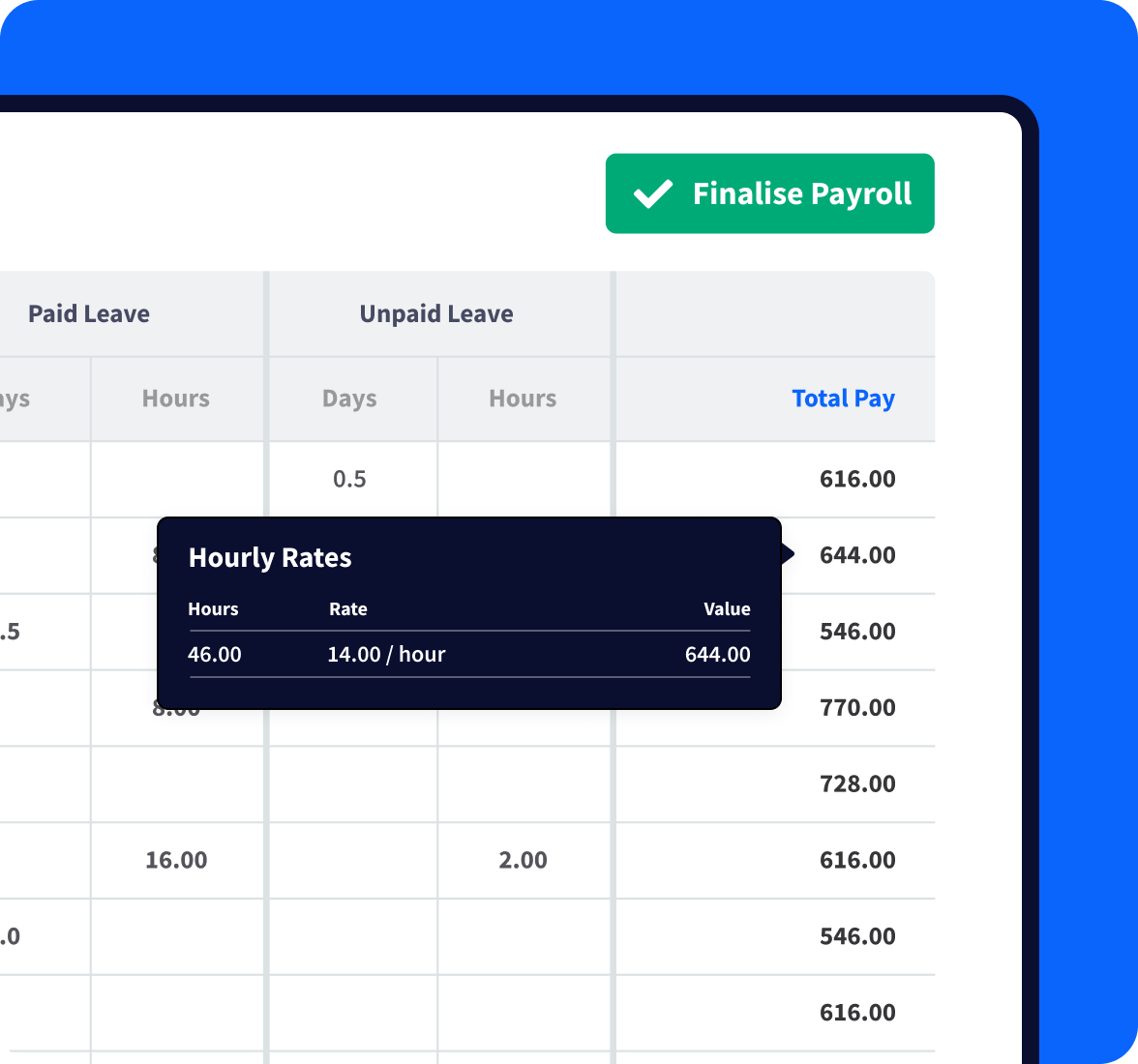
Painless payroll
Learn more about prepping payroll in RotaCloud to help your compliance defence.
4. Unfair dismissal rights extended (from 1st January 2027)
What’s changing?
- The qualifying period for employees to claim ‘unfair dismissal’ is being reduced from 2 years to 6 months.
Why does it matter?
More employees will be able to issue unfair dismissal claims much sooner, meaning a smaller margin for inconsistency and errors.
What can you do?
The unfair dismissal qualifying period change highlights the importance of consistent and well-documented records to protect your business.
With RotaCloud…
- There’s a clear audit trail for everything.
- You have time-stamped records of shifts, changes, and attendance.
- There’s an automatic, clear history of attendance patterns.
- Any lateness, overtime, or unauthorised absence is automatically flagged.
- Fair, consistent decisions are backed and supported.

One-click reports
Learn more about reporting in RotaCloud, covering attendance, hours and costs, and time off and cover for a perfect (and effortless) audit trail.
5. Flexible working becomes the default (in 2027)
What’s changing?
- Employees must be offered flexible working options as the default.
Why does it matter?
While this flexible working law aims to provide UK employees with more control and input, employers may feel they’re left with the opposite. It’s more requests to manage, perhaps more complicated scheduling, while trying to find the perfect balance between business needs and employee preferences.
Without the right tools, it quickly becomes time-consuming.
What can you do?
You need something that allows staff input and reduces your admin time, while not limiting your control or visibility.
With RotaCloud…
- Staff use a self-service mobile app to view shifts 24/7 and submit requests.
- AvailabilityStaff shows on the rota, so no cross-reference is needed for scheduling.
- Staff sort their own shift swaps, reducing admin time.
- Any approvals take just a click and automatically update the rota.
- Open shifts empower staff to choose shifts for themselves.
- Any rota amends are quick, easy, and shared through notifications.
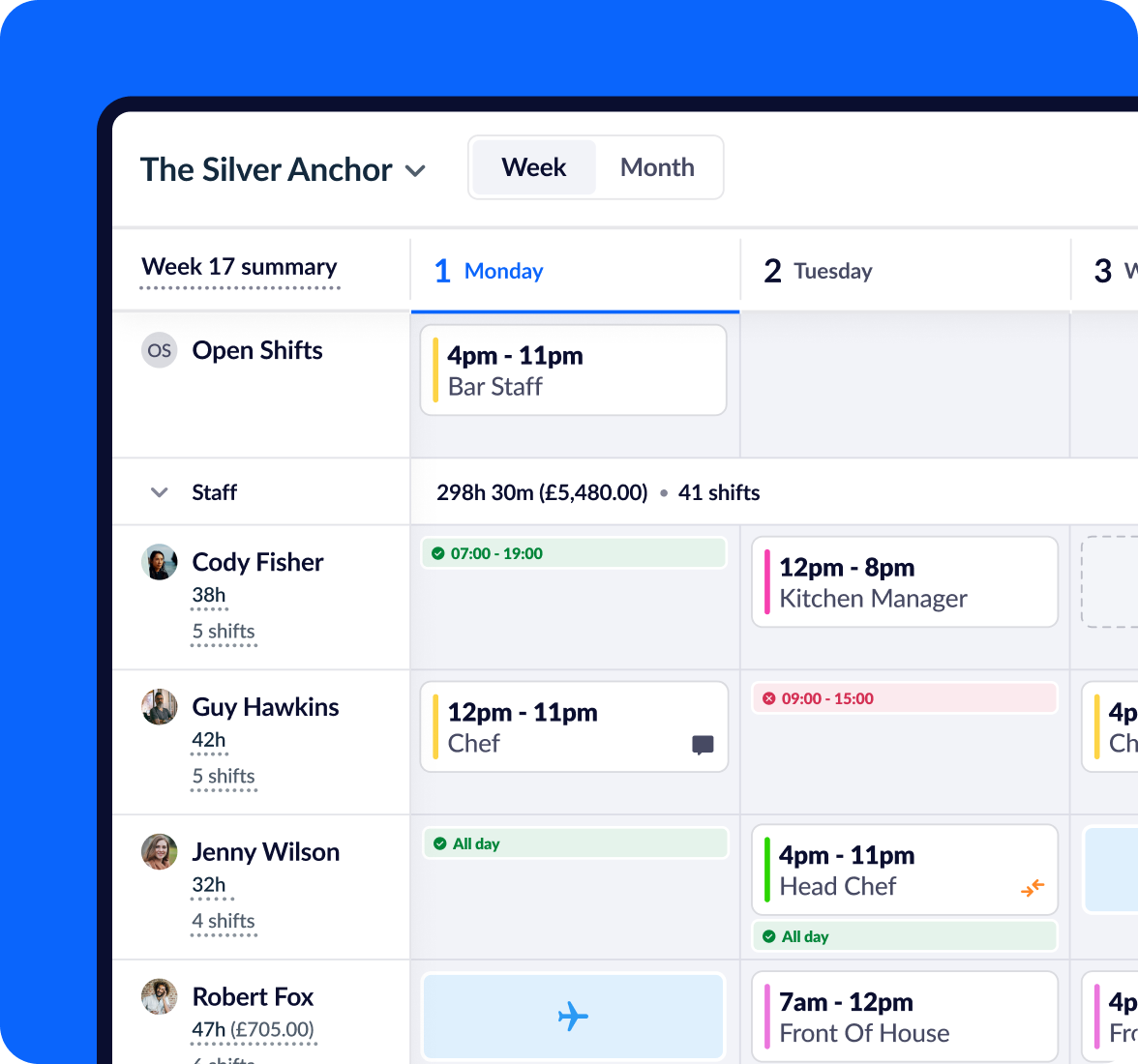
Staff availability in RotaCloud
Learn how flexibility through RotaCloud’s staff availability feature leaves you with less admin, fully staffed shifts, and happier teams.
6. Changes to zero-hours contracts (in 2027)
Next year, there’ll be a ban on the use of ‘exploitative’ zero-hours contracts.
What’s changing?
- Employees must be provided with a minimum number of guaranteed hours.
- There must be an advance notice of shifts.
- Employers must provide financial compensation for cancelled shifts and short-notice moves.
Why does it matter?
While this employment law change makes hours and earnings more predictable for staff, there’s a greater risk of overstaffing and overspending, and (as a business) you lose some flexibility.
The need for accurate forecasting is more important than ever.
What can you do?
You need a better way to plan ahead without losing that control, visibility, or flexibility.
With RotaCloud…
- Forecast labour costs based on actual revenue.
- View real-time labour costs as you schedule.
- Optimise and have full visibility (and control) of staffing levels.
- Set budget caps for spending.
- Compare scheduled hours to actual worked hours.

Labour cost control in RotaCloud
Know if you’re under- or overstaffed (or under- or over-budget) before it happens with RotCloud’s labour cost control feature.
Stay compliant without adding to your workload
With changes already coming into force, now’s the time to get your processes in place.
While the burden of more admin and paperwork looms, you may think that you need more spreadsheets. But what you really need is more visibility and more control.
RotaCloud helps you stay compliant with the employment law changes, without adding to your workload. You can track leave, manage rotas, and keep accurate records all in one place.
Book a demo ➤
Want to see how it all works? Book a demo to see it all in action (and ask all the questions you like).
Start your free trial ➤
Prefer to try yourself? Sign up for your 30-day free trial instead, and see how simple work can be.
Frequently asked questions
When does the Employment Rights Act come into force?
Some of the new employment laws from the Employment Rights Act are already in place, some starting in December 2025 when it reached Royal Assent and then in February 2026.
Most of the measures come into force in April 2026, then in October 2026, then in December 2026, in January 2027 and beyond.
What are the key employment law changes for employers?
Key employment law changes for employers include:
(2026 measures)
- The duty to keep holiday records (April 2026)
- ‘Day-one’ paternity leave and unpaid parental leave (April 2026)
- Strengthened protections for whistleblowing (April 2026)
- Removal of the statutory sick pay lower earnings limit and the three-day waiting period (April 2026)
- Establishment of the Fair Work Agency for stricter compliance (April 2026)
- Requirement for employers to take ‘all reasonable steps’ to prevent sexual harassment of employees (Oct 2026)
- Duty to inform workers of their right to join a trade union (Oct 2026)
(2027 measures)
- The qualifying period for unfair dismissal claims reducing from two years to six months (Jan 2027)
- Protections from fire and rehire practices (Jan 2027)
- Mandatory action plans for gender equality and to support staff going through the menopause (2027)
- Better dismissal protections for pregnant women and new mothers (2027)
- Offering flexible working as default (2027)
- Bereavement leave (including pregnancy loss) (2027)
- Ending ‘exploitative’ zero-hours contracts (2027)
Do small businesses need to comply?
Yes. The Employment Rights Act applies to businesses of all sizes, including small businesses.
Some requirements may feel more manageable for larger organisations with dedicated HR teams, but small businesses are still legally responsible for complying with the same rules. That includes keeping accurate records, managing leave correctly, and ensuring employees receive the rights they’re entitled to.
With time and resources limited for smaller teams, it’s even more important to have simple, reliable systems in place.
What records do employers need to keep?
Under the Employment Rights Act, employers are required to keep clear and accurate records for their employees, including:
- Staff working hours
- Holiday entitlement & leave taken
- Pay & labour costs
- Absences, including sickness
- Contracts & agreed working patterns
If requested, records need to be used as evidence for enforcement bodies like the Fair Work Agency (starting 7th April 2026).
It’s more important than ever to keep everything documented, organised, and easily accessible. This is key for requirements becoming stricter over time.
How is statutory sick pay (SSP) changing?
From 6th April 2026, the lower earning limit of £123 will be removed from statutory sick pay (SSP), as well as the three-day waiting period. This means that employees will be eligible for sick pay from their first day of sickness absence, regardless of what they earn.
Plus, the standard rate of statutory sick pay will increase from £116.75 per week to £118.75 per week, capped at 28 weeks.
What happens if employers don’t comply with the Employment Rights Act measures?
Failing to comply with employment law can lead to consequences like:
- Penalties or fines
- Repayment of underpaid wages or entitlements
- Legal claims from employees
- Increased scrutiny from enforcement bodies
Enforcement is expected to become stricter and more proactive with the introduction of the Fair Work Agency (from 7th April 2026). This means businesses may be asked to demonstrate compliance more regularly.
It’s no longer enough to just assume everything’s in order. Employers now need to prove it.
How can rota software help with compliance?
Rota and workforce management software help businesses stay compliant by keeping clear, accurate, and reliable records for their workforce, greatly reducing manual admin in the process.
With the right system in place, you can:
- Track working hours & attendance in real time
- Keep accurate holiday & leave records
- Monitor absence patterns
- Manage staff availability & flexible working requests
- Stay on top of labour costs
It not only makes day-to-day management easier, but also makes sure you have the documentation needed to prove your compliance.
For many businesses, it’s a simple way to stay organised, reduce risk, and adapt to changing employment laws without the extra workload.